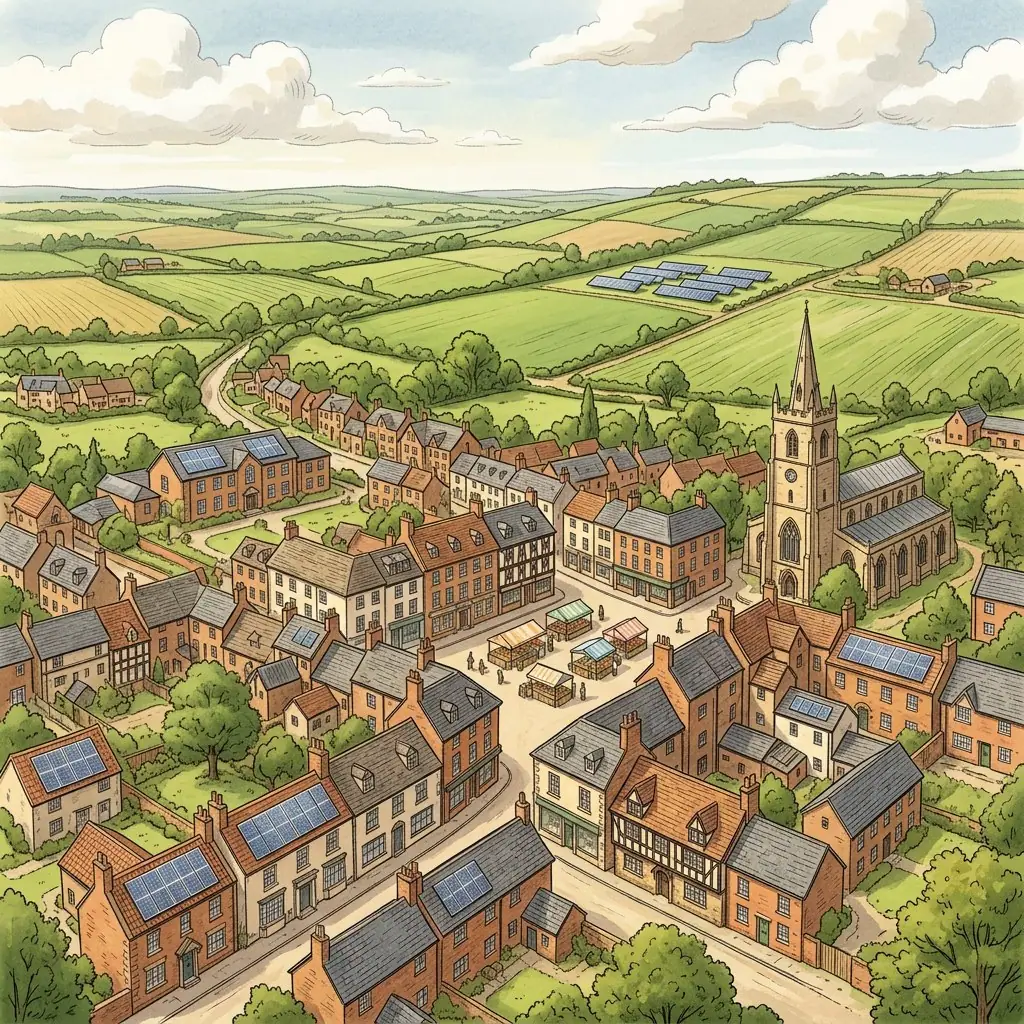
Tiles, flashings and gutters come first
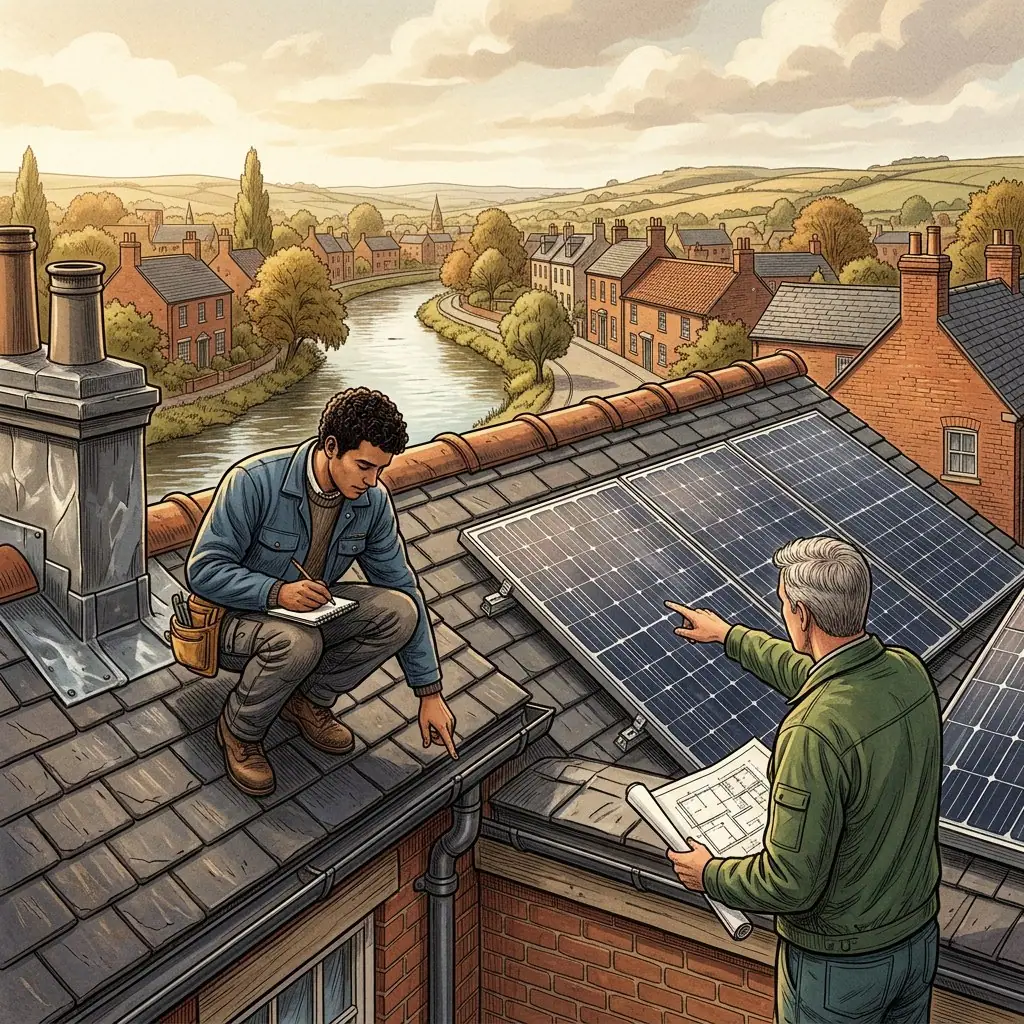
Panel fixings go through or beneath the roof covering, so the covering has to be sound. Inspect tiles or slates for cracking and slippage, check lead flashings around chimneys, and look at gutters and downpipes, since leaks can hide behind panels once they are installed.
East Lindsey’s 2026 appraisal lists the loss of traditional roof coverings and rainwater goods among the conservation issues in the town. If replacement is likely, ask the council what materials are appropriate for your building before choosing between repair and renewal.
Tight frontages and safe maintenance
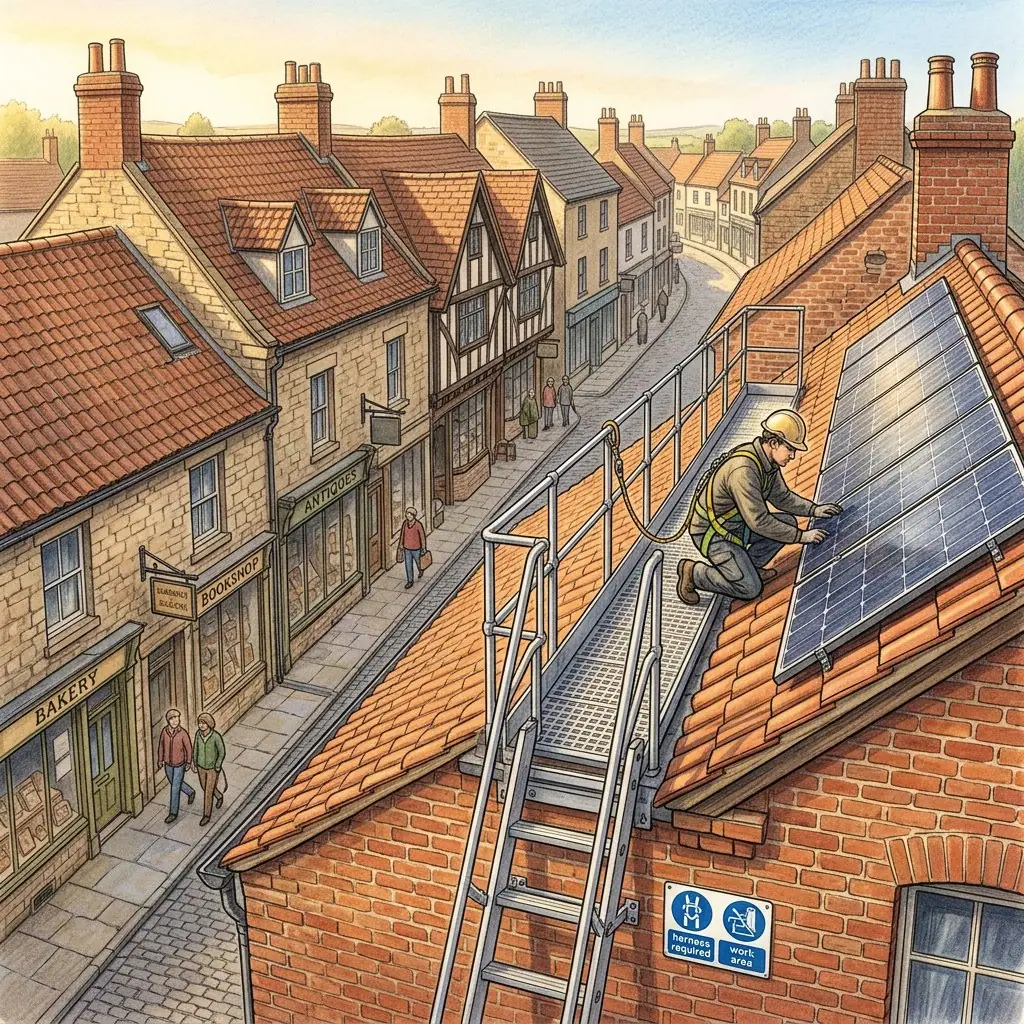
The appraisal describes buildings sitting close to pavements in tightly enclosed streets, with the historic core organised around Market Place. Panels need cleaning, inspection and occasional repair, so ask early how those visits will be reached.
A scaffold or access tower on a narrow pavement needs space, and may need permission to occupy it. Agree working space, edge protection and where equipment will be stored. Future maintenance deserves the same planning as the first installation.
Character areas, the Waring and nearby trees
The conservation area takes in residential streets and part of the River Waring, and the appraisal identifies distinct character areas including St Mary’s, Hamerton Gardens, Banovallum Meadows and Mill Waterside. Properties beside green space may have mature trees that cast shade, so check your own roof across the day.
Horncastle is close to the Lincolnshire Wolds. That does not mean every property sits within a protected landscape, and your address should be checked individually.
What to prepare before anyone climbs a ladder
Collect photographs of every roof slope, any records of past repairs and the age of the covering if you know it. Note which rooms sit beneath each slope and whether the loft is accessible, since the underside of the roof tells a surveyor as much as the top. Ask whether the survey will include a written note on the condition of the roof. If the answer is no, treat any layout as provisional. Honest uncertainty is better than a confident proposal built on guesses. Keep a folder of survey notes and photographs so that any later maintenance visit starts from what was found, not from memory.
See Horncastle’s compact centre
Horncastle’s street pattern helps explain why access needs an address specific discussion. Pan across the town for context, without treating any point as a business address.
Older roof questions for Horncastle
How do I know if my roof can carry panels?
Have the structure and covering inspected by someone qualified. Appearance from the street is not enough, and any limits found should be written into the proposal.
Who maintains panels on a house with no space at the front?
That has to be agreed before installation. Discuss access equipment, pavement use and safe working positions so the plan covers the whole life of the system.
Does being close to the Wolds restrict solar?
Proximity alone does not settle it. Ask the council whether any designation applies to your property.
Ask about a Horncastle property
Use the homepage enquiry form to describe the building and explore the next step.