
Match generation to the timetable
Solar produces most when the sun is high, which often overlaps well with a working day. But an organisation only benefits fully if it can use that power as it arrives, so ask for actual half hourly or daily demand data rather than assuming everything will be consumed.
Closure windows matter just as much as opening hours. Holidays, half terms and shutdowns can leave generation unused, so a sensible assessment states how those periods affect the picture. Ask any adviser to show assumptions clearly and avoid single headline figures.

Rising ground, tall neighbours and trees
South Kesteven’s St Anne’s appraisal places the area on the eastern slopes of the River Witham valley, rising towards a limestone escarpment. The southern part is mainly residential and educational uses predominate in the north, with Wyndham Park at the northern end.
Slopes and open parkland can mean trees and tall buildings close to a roof. Survey shade around each roof separately, because one school building may be clear while another is not.
Getting equipment onto an occupied site
The appraisal notes that the New Somerby Victorian suburb grew with the town’s industrial expansion, linked to the older town by crossings on St Catherine’s Road and Avenue Road. Routes in and out of an area like this are shaped by history, and deliveries need to be planned around them.
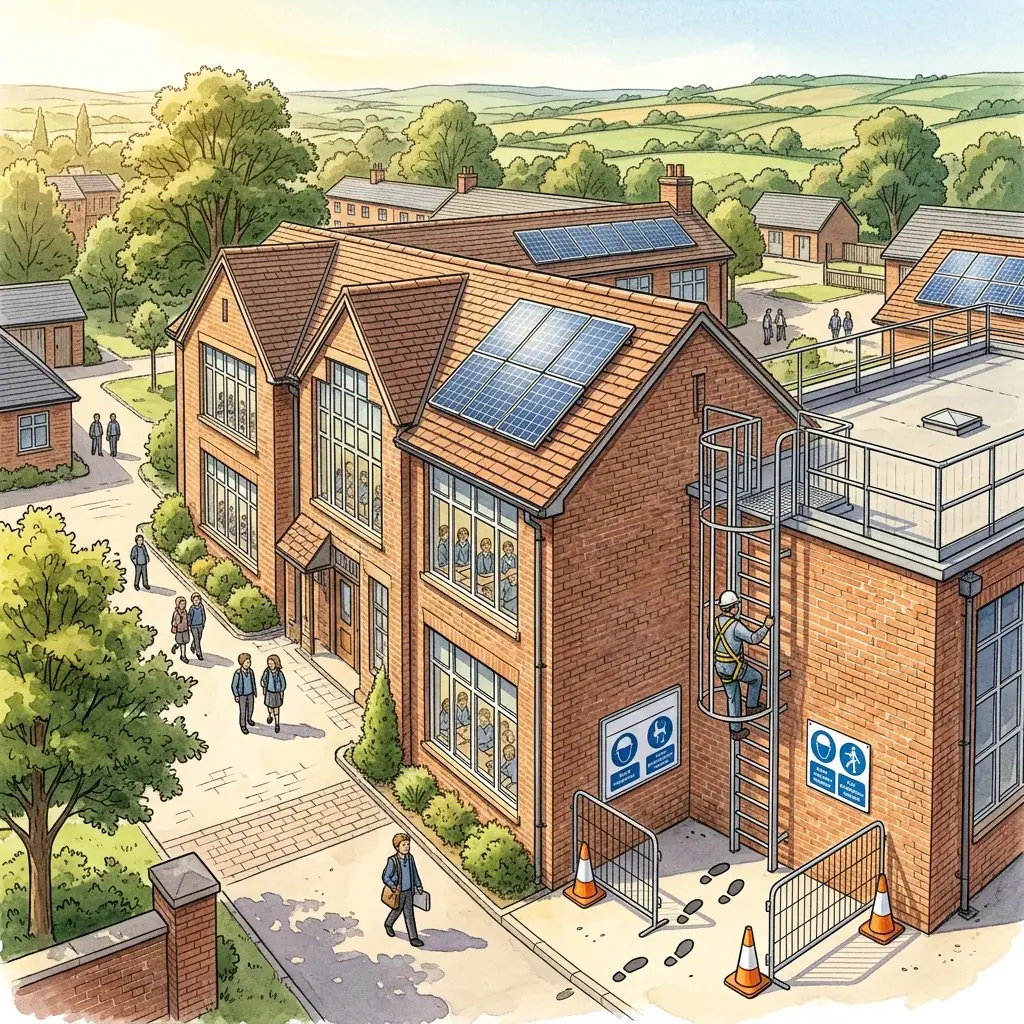
On a working campus, discuss safeguarding procedures, fenced work areas, roof access points and delivery times before dates are fixed. Installers on site should not cut across pupil routes.
Questions for the governors and site team
Before inviting proposals, agree who can authorise roof work, who holds the building records and how roof maintenance is currently managed. Ask about warranties on existing roofs, because fixing panels may affect them. Decide how the site team will receive findings, and whether the plan must be reviewed by trustees or a governing body. Clear ownership of these questions shortens the process and makes the eventual proposal easier to check. It also helps to name one person on site who can answer access and timetable questions, so that surveyors are not passed between departments. Keep a short log of decisions, so that anyone joining the governing body later can see why each choice was made.
Check the Grantham building’s setting
A building’s position within Grantham matters when discussing delivery routes and nearby development. Adjust this town centred view to examine the surroundings; no business premises are marked.
Grantham organisation questions
Can a school use all the power its roof generates?
Not necessarily. Weekends and holidays are quiet, so the review should compare generation with the building’s real demand across a full year.
Does rising ground around St Anne’s affect shade?
It can change what surrounds a roof. Check trees, higher neighbouring buildings and slope direction for each roof rather than the whole area.
How is work coordinated with a busy college site?
Through a written plan covering access, fenced areas and delivery times, agreed with site staff before work begins.
Ask about a Grantham property
Use the homepage enquiry form to describe the building and explore the next step.